Friday, 4 January 2013

Visions of Music - Enya and "The Dream of Waking Earth"

Omnem crede diem cride diluxesse supremum
(believe each day that breaks to be your last) -  Enya, Pax Deorum


Music wakes me to story, evoking images and scenes within my mind. I've come to realise this gift is a form of synasthesia, but this knowledge does nothing to dispel my wonder at the beauty of my fantasies, and my sense of "travelling" to strange and wondrous places, within my own mind.


Behold below the story I envisaged when listening to Enya's beautiful "Pax Deorum". The story is strange, and heroic, and the ending mysterious. Alas - when the music ended I saw no more. But stories are never done, and perhaps one day I shall continue it.

The Song of Waking Earth


A wind calls above the School of the Lightgatherers: a cold, wet wind – a winter wind, that yet smells of coming sweet spring rain. With strong fingers of air it rakes the hair-fine needles of the plateau pines, so that the mighty trees toss their proud heads blackly against the night sky. But the high stone walls of the school stand firm, as they will for many years, and the wind spends itself wailing around the crenelated walltop, a wordless prophecy.

A time of change is indeed foretold – for the solstice of winter is past, and all growing things feel the foreboding of spring. Yet darkness still holds the land, and all life is gripped by bitter, blighting cold.

Beneath the meagre shelter of the rocky plateau upon which the School is built, huddles a village, surrounded by a few bare, frostbitten fields and a wide wilderness. Frequently, the inhabitants turn to look longingly toward the east – but the sun has not risen since Tallowtide, and since then, snowclouds have obscured the moon, so that none can measure the turning of the days save by the waning of candles, and notches on the hearth. As it happens every winter, Time itself is frozen in the village, but though they do not know it yet – this bleak time of waiting nears its end. Tonight is the ritual of Lightsummon. Soon, it begins again, in the School of the Lightgatherers.

Tonight, the courtyard of the Lightgatherers is torch-lit and crowded with moving figures; women all – old and young, of all heights, slender and thick-waisted; hooded and cloaked in black velvet. To a watcher on the ground their movements would appear casual – each woman walking, seemingly at whim throughout the courtyard, from end to end, around the perimeter; weaving in and out of the crowd. But if we were to glide on silent wings over the school, like a snow-owl, invisible in the night – the order in the chaos is revealed; an ever-shifting pattern, like a stately dance. No word is spoken, but as the snow in the courtyard is ground to slush by many feet, and the wind blows back the snow clouds, to reveal a sparkling sky of midnight-blue, a song is born.

From the throat of one neither old nor young, of middling height but a strong, wise face it begins – low, and quiet and rhythmic. But soon the song rises above the calling of the wind, for like a candle flame igniting many others, the chant is passed from woman to woman, growing in power until it contains the strength of a multitude. This is the song of Lightsummon; a song of many parts, and many voices. But just as a tapestry may be woven of many threads of varied hue, yet may reveal a glorious and cohesive pattern, so the song contained a mighty spell. They – the Lightgatherers – sang of the waiting of the world, and blowing clouds, and of the pounding heart of the earth that throbs with fiery force under the snow.

And now, from black iron sconces in the wall, the strongest and tallest among the women lift torches and carry them high, in gloved hands. The flames seem to blaze brighter and hotter for their singing, and fierce are the women’s smiles in the flickering light. The other Lightgatherers take warm censers from a brazier, and swing them on fine silver chains. From each moon-like globe emanates a fresh and woody scent that recalls the memory of green and pumping sap. As the sky is blown clear of the last snow-clouds, the heavy doors of the School swing open, and the Lightgatherers stride out into the night, moving swiftly in a double line across the plateau. The song now is powerful as a river, with the chanting of elder voices providing the depth, and the high harmonies of the maidens shifting and beautiful as the play of light on a rushing stream.

From a mighty height, the path from the plateau curves down toward the village. Steep it is, and treacherous, as it has been unevenly eroded by many storms and is covered with loose gravel. But fast and sure as meltwater they descend, the Lightgatherers, and their song is heard long ere they reach the village below.

From the cold stupor of winter the villagers awake, and the inhabitants of every house, from youngest child to wizened grandfather, stand at their windows to watch the Lightgatherers come, and in each hand they grip a scrap of unlit tallow-candle.

When the company of Lightgatherers enters the village, the women’s quick stride slows to a solemn, steady tread, and their song becomes gentler; less fierce and more hopeful. Though they look neither to the right nor left, the singers’ voices wake in the heart of every listener soft memories of sunlight and tender growing things – and the torches and swinging censers create a warm, sweet-scented illusion of spring. As the Lightgatherers pass, each villager lights their candle, so that to a watcher it would seem the singers leave a trail of light that bravely burns even as the company passes out of the village into darkness…

For leave they must, and take an arduous route into the frozen wild. No road is laid to guide their feet, but the uncovered moon reveals a sparse trail of white pebbles leading into the distance. Onward they march – their defiant song swelling again in volume – and they stride unceasing, over crackling frost that glitters in the moonlight like splintered glass, and around deep drifts of snow; up rocky hillsides tufted with dead, cold-blasted grass.


For an long and weary way, their torches are the only lights in the frozen waste, save the cold and distant sky-companions, the stars and the moon, but all at once, sinuous and iridescent flames of green and gold appear in the sky, forming a flickering trail of light. Though the Lightgatherers’ song was powerful before; now it sounds exultant, as if the women’s hearts had been further strengthened by the fire of the sky, and the steady pace increases.

Down at last they venture, following a frozen river into a dark valley, wooded with tall, forbidding pines. This is the valley of Telmoth, wherein few dare to go. The ways of its forest are torturous, of blackness unrelieved by any glimpse of sky – and villagers mutter of fell beasts that roam unchecked and ravenous.

Yet resolute still, into utter dark they march, down into the terrible wood – young and old together. Their torches blaze like embers of the sun, and their song is fierce as fire. Downward and inward is their path, and yet they smile still, for to wake the earth to light again they must pierce dark winter’s heart with voices and with torches – and to summon back the sun they must enter deepest shadow. 

They enter the forest, a singing, shining company. But their light is lost between the vast trunks of trees, and their song fades with distance – till all that can be heard on the Telmoth’s lip, is the sound of wailing winds, and the roaring of the pines.


Thursday, 3 January 2013

A Midsummer Night's Imaginings

The slender acacia would not shake
One long milk-bloom on the tree;
The white lake-blossom fell into the lake,
As the pimpernel dozed on the lea;
But the rose was awake all night for your sake,
Knowing your promise to me;
The lilies and roses were all awake,
They sighed for the dawn, and thee.
- Alfred, Lord Tennyson, Come into the Garden, Maud


Magical Garden by ermzam on deviantart

I thought I'd share with you today a short story I imagined last night, when at first I lay awake with a head buzzing with worries. To calm myself, I did what I love best, which is to imagine myself into another place; to craft a scene of such peace and beauty that I would forget my cares and fall blissfully asleep. It would have worked - except I thought suddenly that I did not want to lose this waking dream, but to write it down instead. So I kept myself awake writing down the visions that I saw, and until I fell asleep at last with the pen still in my hand and my writing book in my bed...

When I woke I told myself to write the story properly, with all the detail I had left untold in my midnight scribblings, but which I could see clearly, gleaming in my mind. So I wrote, and as I described those things I "saw" - I saw many other things and the simple scene grew...

I hope that you enjoy.

Night Garden by Arwen's Grace on deviantart


The Visitor in the Night-Garden

One night in deep midsummer I left my close stone chamber  with the tapestries and furs, and tiny window, and descended spiral stairways to the garden. The ancient stones which formed the steps leading from my room halfway down the tower were grooved with the tread of countless years. These I negotiated carefully, tiptoeing with wavering gait, for they were treacherous in the dark. For support, I kept one hand on the inner wall, the tower's spine, which was intermittently scored by the sword-cuts of an attack on the keep, repelled in the time of my grandfather.

Midway down the stairs, the old steps were replaced with sandstone, softer than the ancient granite, but as yet unmarked by time. When I was but an infant, a great deal of the old stone had been severely damaged by the acid slime of the Terrible Worm and her foul hatchlings when they invaded during the Red Years, and after they were destroyed the pitted rock was quickly replaced. The new stone left tiny grains on the sweat-sticky soles of my feet, as I flitted from the tower through the great hall - deserted save for a boarhound sprawled below the dais with a bone - out into the pleasure-garden.

The pleasure garden was lush and sweet-smelling; tangled and delightful. In the bleak winter it was enclosed within a protective palace of glass, but tonight it was open to the night breezes, which loitered in the pathways, creating rising, swirling eddies of cool air that raised the hairs on my skin and tingled my body with exultant, heart-jumping pleasure. For a time I wandered the labyrinthine paths, white stone laid between thick-planted, exotic beds of maraya, jasmine and summer-roses - lost in waking dreams - and the twining vines reached lovely tendrils over me. 

At every junction of the path there stood a moonwashed fountain of white marble, each a different and fantastic sculpture. The first that I encountered was an ancient hero of my family - my great-grandmother Temara who held the keep against attackers after her son was slain. To me it seemed her petrified image yet retained some of her legendary vitality and courage. 

The next fountain flowed from the snarling maw of a strange and rare beast - a fire leopard, whose coat in life was black as coal and spotted with crimson embers - and the next was of a hooded, faceless god of elder days who stood with palms outstretched and pouring with water. This last image particularly was conducive to strange thoughts, and yet I lingered there awhile, listening to the musical falling of the water, which to me sounded like the gentle notes of a wooden xylophone.

At last I wearied, and followed a moon-bright trail to the secret centre of the garden - a round, hedged enclosure formed by close-planted bushes, with a hidden entrance under branches. Here was the castle's shrine to Hypnos, god of sleep - a stone wall carved with prayers and covered in ivy. Within its gentle curve sheltered a white bed of smooth, painted metal, whose bedposts rose to form an arched canopy, meeting at a graceful point at the top. At the head and at the foot of the bed grew a tree of white wisteria, whose flowers hung in clusters like dripping, sweet-smelling stalactites over the sleeper, while on either side of the trees, the dark green foliage of blossom-starred maraya filled any gaps.

White wisteria


To that leafy bower I hastened, and on that bed I laid myself, under soft white sheets of fine cotton and the furry weave of poplar-felt. I lay awhile listening to the shrill, quiet scritterings of nocturnal insects in the bushes, and the occasional call of a night-bird. Beyond the secret garden I could hear the gentle soothing music of the fountains, and thus gradually, I sank into a state of deep calm.

And then it seemed to me that another entered the secret garden, on quiet feet - a tall man with a face fair and pale as moonlight, and hair as dark as shadows. He was black-clad, and he wore a cloak of dark gauze which flowed behind him, as though constantly stirred by night winds.   

The hedges parted before him without a rustle, and soft-shod he strode the white path through the secret garden. Some distance from my bed he stopped, and turned his face up to the moon. Wild then he looked, and beautiful, but though he was so strange I felt no fear. He began to sing, and his song was the ebbing of the sun and the spreading of shadow, the cool relief of night and the mystery of darkness. And it seemed to me that the sounds of the insects and the birds; the winds, the waters and the rustlings in the leaves - blended in his song and added to it. The song swelled deeply like a pool of sweet water - and all at once I heard a high and cold refrain, as though the stars themselves had joined in chorus to the melody. 

After a time, the man stopped singing, but it seemed his voice continued in all things and everywhere. Now he walked closer, until he stood between me and the moon, and his shadow fell across my bed. But the calmness in me was deep, and instead of fear I felt only peace and a great wonder.

Now he spoke in a low tone - and it seemed he spoke to me, and only me - but his words were strange, though I thought I understood the tone. At first he spoke rapidly and with passion, but then his words slowed and it seemed he mused aloud. Drifting, I listened, for it seemed he spoke of a mystery I desired much to know, but could not understand.

At last he knelt beside my head and gazed with darkening eyes upon my face. Fain I would I have met his gaze - but with the stirring of his breath against my cheek my eyes closed of themselves. I thought he sighed... then knew no more till morning.

And in the morning - what happened? Ah - that is a story for another night... 

Wednesday, 2 January 2013

Tolkien and the Elvish Muse

...themselves they named the Quendi, whom we call Elves; but Orome named them in their own tongue Eldar, people of the stars, and that name has since been borne by all that followed him upon the western road.. In the beginning they were stronger and greater than they have since become; but not more fair, for though the beauty of the Quendi in the days of their youth was beyond all other beauty that Iluvatar has caused to be, it has not perished...                                                        - The Silmarillion, J. R. R. Tolkien
Elf Fantastic by John Howe
Whosoever rejoices in the exploration of fantastic and beautiful "secondary worlds" will surely appreciate any "extra" information to add further depth to their immersion. At least, such is the case with me. After recent and delightfully immersive experience watching the entire Lord of the Rings trilogy on one day, and two days later watching The Hobbit (both times dressed in elf-attire) I avidly sought out Tolkien's other volumes on Middle Earth - revisiting the Silmarillion and reading Morgoth's Ring for the first time. 

This picture makes me think of the maiar, or lesser-spirits of Arda - many of whom were helpers of Yavanna, goddess of all living things, and were wondrous in beauty .

Perhaps I had previously been too young to appreciate them properly, but I was struck, as never before, by the wondrous richness of Tolkien's world, and the incredible mythological tapestry he created upon which to weave his tales. For to the lover of myth and great legends like those of King Arthur, the Mahabharata and the Odyssey, the Silmarillion is infinitely fascinating, dealing with the Music of the Ainur and the creation of Arda in the Valaquenta, and in the Quenta Silmarillion the epic exploits of the Elves before the Third Age.  

Morgoth's Ring, cover art John Howe

Morgoth's Ring is composed mainly of notes and various drafts for the Silmarillion: interesting as it reveals the workings of Tolkien's mind and the process of "secondary" creation. But most intriguing of all is the essay "Laws and Customs among the Eldar", which reveals much about the nature and behaviour of the Elves, including marriage customs, naming traditions and the relation of the soul (fea) to the body (hroa). 


Luthien's Lament before Mandos, in the halls of the dead


The immortality of the Elves lies in their fea being "bound" to Arda (the world) until the End of Days, but their bodies can be slain, albeit with difficulty. The souls do not depart the world, but travel to the Hall of Mandos (lord of the Dead) in Valinor - the place to which the Elves depart at the end of The Lord of the Rings. There they are "corrected, instructed, strengthened or comforted, according to their needs or deserts" by the Valar, the gods who reside in Arda, before being reborn in an identical body and enjoying a second childhood sweetened by the intelligence and memory of the first life. After their rebirth however, most Elves do not return to Middle Earth, but stay forevermore in the West, in blessed Valinor.

The Grey Havens, by John Howe

Of the Elves who do not die, and who do not take the white ships into the West - Tolkien writes most poignantly. These are the Lingerers - whose souls, as they remain for long Ages of the world, gradually consume their bodies, until "the body becomes at last a mere memory held by the fea". After the passing of their kindred, these last elves of Middle Earth become invisible to mortal eyes...

However...

"[The Lingerers] do not seek converse with Men at all, save maybe rarely, either for the doing of some good, or because they believe in a Man's spirit some love of things ancient and fair. Then they may reveal to him their forms (through his mind working outwardly, maybe), and he will behold them in their beauty. Of such he may have no fear, though he may feel awe of them... For the hearts of true Men uprise in joy to behold the true likenesses of the First-born, their elder kindred; and this joy no evil can counterfeit."

What is this? For those of us who mourned the passing of the Elves from Middle Earth, or feel sorrow at the loss of magic from the world - Tolkien provides relief. For those of us who feel the beauty of the Elves like shining stars in the heart, and long for them - for us who feel "love of things ancient and fair" - an inspirational fancy. In his creation, the Elves are the muses of art, poetry, music and writing - thus in our mortal makings we reveal their forms... 


I feel the mythic truth of this. I see the high, ethereal beauty of the Elves in art...


In sculpture...


...and in architecture...


I hear their voices in music...

Enya - Aldebaran


Libera - Jubilate Deo


In Nature and in fantasy I feel their presence.


Ancient Voices, by Rob Alexander

In all beauty around me are evidence of the Lingerers. Thus the worlds of Middle Earth and our own world are brought, beautifully, together. 

Monday, 31 December 2012

All About the Eve - NYE and the Power of Anticipation

I can't help flying up on the wings of anticipation. It's as glorious as soaring through a sunset... - Anne Shirley, Anne of Green Gables 

Flight by K-Bladin on deviantart

It's New Year's Eve and through my open window drifts the sound of revelry. The harbour below is pearled with myriad yachts and pleasure-boats, which cluster together in preparation for the spectacular celebratory fireworks. A stunt-plane traces sinuous trails above the city - first soaring higher than the clouds, then diving abruptly to skim metres from the surface of the water. My nearest brother is out partying with friends, and inside the house the rest of my family ready themselves for merriment.

Amidst the happy bustle I wonder, why is it that we celebrate the eve of the New Year more than the day itself? What is so special about festive "eves" in general? In the West it seems many of our greatest cultural traditions occur on the "eve" of an event. Alongside New Year's Eve, both Christmas Eve and All Hallow's Eve spring to mind as nights steeped in story, myth and tradition. Why is anticipation such a potent magic?

Light and shadow are indistinct in the anticipatory mind... 
Anticipation for any desired event is usually more pleasurable than the thing itself. Who can forget the incredible childhood feeling of sleepless, tingling wakefulness the night before a birthday, Christmas Eve, a party or journey – that painful, delightful waiting for the morrow… Excitement and uncertainty mingle in the imagination to form conflicting visions of glory. Lost in our dreams of “what could be”; godlike, we revel in a sense of control – shaping our visions in a fantasy world of unlimited possibility. Anne was right when she compared anticipation to the glorious sensation of “soaring into a sunset” – but with the flying comes the fear of falling. In a world of limitless possibility, the worst can happen – the unthinkable manifests itself in shadowy, fearful forms.
This mingling of desire, excitement and fear at the times of great collective anticipation such as the “eves” of feast days, saints’ days and other celebrations explains their mythic significance. As desire blazes, our certainty in the future wavers, and other things are seen –smoke-shadows dance on on the wall and faces mouth secrets in the flickering flames. Times of anticipation are times of mystery – we want so badly for our beautiful visions to be made real, but we inevitably recognise that the control we have over our imaginings is illusory… Thus we become surrounded by spirits, wraiths, witches and demons – otherworldly beings who wield that elusive control over the future and the past; and we adopt superstitions to attempt to influence the outcome of events.

A look at just a few of the most mythic “eves” of the year reveals an enchanting array of story and belief, many of which were thought to influence the future:

 January 20: St Agnes’ Eve 

The Eve of St Agnes
  They told her how, upon St. Agnes’ Eve,
  Young virgins might have visions of delight,
  And soft adorings from their loves receive
  Upon the honey’d middle of the night,
  If ceremonies due they did aright;        
  As, supperless to bed they must retire,
  And couch supine their beauties, lily white;
  Nor look behind, nor sideways, but require
Of Heaven with upward eyes for all that they desire.
Immortalised in Keats’ poem The Eve of St Agnes, this hallowed night was believed to give girls enchanted dreams of their lover, if they fasted and slept the night naked without looking behind or to the side.

April 24: The Eve of St Mark’s Day 
St Mark's Eve
If one were to watch the churchyard alone this night, they would espie the souls of all who were to die in the coming year entering the burial ground.
April 30: May Day Eve
May Day Eve
This day was the eve of the Celtic festival of Beltaine, was a day especially associated with the Faerie, and many old Irish observances dealt with mortal attempts to gain grace with the capricious “Good People” and the misdirection of the malevolent influence of witches, using fire and flower in rituals of purification. It was also thought that young girls could discover the name of their husband-to-be by placing a snail between two pewter dishes and watching until midnight. 
June 21 (in 2013 but a Solstice day): Midsummer’s Eve
Midsummer's Eve 
This was also a day under the influence of the Fair Folk, and witches were thought to hold strange revels in the forests or fields… To avert misfortune, people would conduct more purifying rituals of pagan origin, with bonfire-leaping harking back to Celtic Druidic rituals, and wreaths of mugwort woven to “protect man and beast” from eldritch influence.
October 31: All Hallows’ Eve
Samhain
"Halloween" is a mysterious night with pagan, Celtic and Christian influence revolving around the harvest and the spirit world- ranging from the Ancient Roman festivals of Pomona and Parentalia, the Celtic festival of Samhain, various European harvest festivals and the Christian All Soul’s Night. It is incredibly magical, with traditions ranging from divination, prophecy, spirit-resting and “guising” (trick-or-treating).
December 25: Christmas Eve 
Christmas Rose
This is a night crammed with religious and mythic beliefs and superstitions. In Poland there was a belief similar to the New Year’s Eve beliefs: that however the night passed, so would the coming year. It was a time of miraculous and magical events - at midnight the animals were thought to fall to their knees in homage of the birth of Christ, various plants were thought to flower (such as myrrh and Christmas Rose), Saint Nicholas (Santa) to travel the world bringing gifts to children. It was also a time (similar to May Day Eve) where “maidens” would try to predict their future-husband, and country-folk would try to predict the weather.
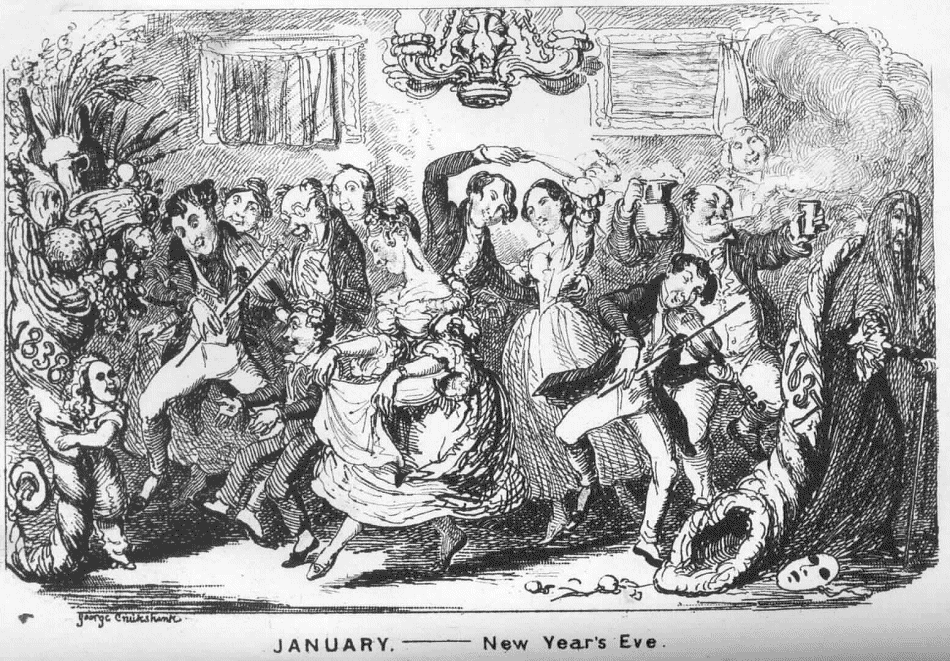
December 30: New Year’s Eve 
Revels on New Year's Eve
Superstitions for this night include the familiar one of “ringing in the new year”, making noise at the turn of the year to frighten away evil spirits who were thought to be able to affect the coming year.

New Year's Eve Fireworks
As the New Year approaches, we are filled with pleasant and unpleasant fantasies of the future. But all in all, I think it’s for the best that we are not omniscient and omnipotent. Uncertainty is what fires the imagination and casts the shadows of Mystery. If we were able to control events – then we would lose the delightful, perilous soaring of anticipation. And for all of you, my friends and readers, I wish that your coming year fulfil the gleaming promise of a sunrise, but that enough of the unexpected occurs to keep things interesting.  

Happy New Year.

Saturday, 29 December 2012

Marsh Priestess - a Personal Story


But all I remember 
Are the dreams in the mist... 
There's something out there 
I can't resist


In my last blog post I wrote a bit about the mysterious feeling of sentience one senses sometimes from trees in the forest. It put me in mind of a short story I wrote last year, which was based on my own experiences in the bushland at the bottom of my mountain garden. 

Most of the garden is cultivated, with roses, bulbs and other flowers, deciduous and fruitful trees, little paths and birdbaths... It is a lovely garden, with a magic of its own. But about a hundred metres from the bottom of the garden stand two giant pines, marking the transition from the garden to the wild. Beyond is bushland, often mist-shrouded, where all the colours are different, mysterious and strange and where the eucalypts stand like pale gods with their proud heads crowned by cloud. And at the very bottom is a valley with a grassy, gurgling marsh, full of humming things and secretive trickles. Perhaps the mythic nature of trees is what calls to me, or I sense the borders to otherland fade when I am by a marsh. For sometimes I feel a call to I wander there alone, and at these times I feel a sense of kinship with the forest. 

I hope you enjoy the story.

Photograph credit, Stephen Hayden Photography

Marsh Priestess


I am the priestess of the scorned and wild forest. Afternoons, the softly falling chill brings with it the mists, which, clinging, frost the eucalypts with tiny jewels. I stand on the track my constant pilgrimage has worn, while the borders of reality are shrouded; first the garden, green and tame beyond the furthest pine; the straggling wire fence; the bleached rope swing; all fade. The bush has reclaimed the land from civilisation, and I am enclosed by the pale trees, their stringy bark hanging in rags off white and virgin limbs; initiates disrobing for an ancient ritual. I tread carefully, hesitant to disturb the soft and steady dripping of condensation from the myriad leaves. The track is soft and spongy; new-speckled with tiny ferns I weave around, unwilling to crush.

As I descend, I briefly pay homage to the matriarch, the huge red-bark whose maternal roots shelter and protect the forest’s treasure: the waratah I discovered with my brothers last summer. The red and sticky sap has crusted carnelian, and it beads my forehead as I lean against the trunk. I feel the soil’s moisture soak my knees and watch it slowly darken my skirt. Further down, the grasses have starred themselves in pale blossoms that glow amidst the slate and khaki of the dimming mist. In the half-light my merino cardigan fades to muted steel, until an intruder, stumbling from the end of the road, (hidden a scant thirty metres to my left), would find it hard to see me, my goose-pebbled arms around my wild sister; my wet and darkened hair sticking to my face like sheeted bark.

I near the end of the track, averting my eyes from the plastic teeth of a rake, which leers drunkenly from its precarious position in the fork of a banksia, where my father must have propped it. The rake is a blasphemy to the untamed sanctity of the forest. Angrily, I push it over and watch in satisfaction as it is swallowed by the eager shrubs. A cluster of ferns ends the path, damp fronds caressing a weathered piece of sandstone. Many years ago, the rock was engraved with plain, sensible English, marking the boundary between our property and the next. Now, the crumbled inscription is illegible, translated by the endless dripping of the mists into an arcane script. Here, I too can go no further. The track breaks off at the edge of a sharp depression. Beneath me lies the fertile green of the marsh, waiting silently for nightfall.

The ceremony will not be marked by sunset. My family’s cottage, sitting smugly at the top of the hillside beyond the bushland’s boundaries, regularly catches the last rays of the setting sun. Here, however, obscured in the mist, the marsh is enveloped in mystery. A little to my right, a scribbly-gum has split itself into three, extending over the swamp like the hand of a druid over a cauldron. Gingerly I walk along the middle finger, uncomfortably aware of my sneakers’ tentative friction on the wet wood. Convulsively I grip the twigs then straighten, poised above the morass. As the mist dims and the pale, scented stars light the long grass, I await the invocation, my sacrifice clutched in my hand.

 Sonorously, the bullfrogs give the signal. Symbolically, I sacrifice a piece of my body, heart and soul to the wild spirits of the marsh; a bead from my childhood necklace; a twist of my hair moistened in spit; a name scribbled furtively on a scrap of paper… They slip from my fingers and vanish into the dark trickling of the swamp. On the other side, two foxes perform their mating ritual unconcerned before my gaze. For a few moments, I am one with the forest. But a few moments are all I am granted. The carrying deep voice of my father, floating down the valley, calls me back to humanity. Reluctantly I force myself to turn away from the marsh; to walk slowly back up the path in the chilling fog, feeling the damp cling to my skin; back to reality.

At the border I pause, my hand on the solid trunk of the vast pine marking the end of the forest. Up the hill, past the new-mown lawn and the rose garden, the kitchen light gleams warmly and my father’s shadow moves industriously against the glow. Solemnly, reverently, I turn and make obeisance to the silent eucalypts and they toss their crowns in acknowledgement. Then I cross the border, and make my way up to the house, out of the mist.


Thursday, 27 December 2012

The Glory and the Dream: Lucy Pevensie and I

I am a magnet for all kinds of deep wonderment
I am a Wunderkind
I am a pioneer naive enough to believe this
I am a princess on the way to my throne


Rewatching two of my favourite movies, the first two in the relatively recent Narnia adaptations, I realised that contrary to what I had thought as a child, the character with whom I most  identify from of the Narnia chronicles is not Susan, but Lucy Pevensie. In fact - the more I understand myself, I come to believe that out of all my fantasy heroes - she embodies most the kind of person I am, my outlook on the world; my insecurities and my delights.


Lucy is the one who discovers Narnia first - the girl who enters the snow-clad forest, not with fear (as most people would enter an strange, cold place at the back of their wardrobe), nor with the assumption that she is hallucinating or dreaming. Instead she laughs with wonder; not astonished but delighted. Clearly, she had always believed such things were possible - perhaps had imagined them, and longed for them, unuttered. The snowy, bitterly cold Lantern Waste is to her a marvelous place - a miracle - her kingdom. From her first visit, she is the most at home of all the Pevensie children in Narnia, the one who feels the most joy in its air and beauty in its every aspect. She is the one who makes friends with the faun and the beavers - and who feels closest to Aslan. 


I think I am very like Lucy. But when I first read The Chronicles of Narnia that very similitude was what made me ignore her. After all - she was just a little girl, the same age as I was when I picked up the books for the first time. And I knew I was no hero. Susan however - the responsible and superior elder sister - had all the qualities I felt I lacked but passionately desired. She was older - taken more seriously than a little girl. She had beauty (something both Lucy and I felt we lacked, though I've later come to learn that we were both wrong), and she had deadly (and admirable) skill with a bow. But with all her qualities, she is the one who feels the least connection to Narnia, who is the most content to live in the "real world"... Now I understand this, I question - is this what I really want?

There's a telling exchange between Lucy and Susan in Prince Caspian, where Susan wonders why she didn't see Aslan when her younger sister did. Lucy answers: "Perhaps you didn't really want to." Susan says wistfully to her, "You knew we were always coming back, didn't you?" Lucy replies, as if it was obvious - "I hoped so".  It is clear here that Susan had given up hope on ever returning to Narnia, and almost didn't want to come back because it would disrupt her carefully constructed contentment in her "real world" life. Even her pleasure at returning is tempered by the bleak thought - "while it lasts..." Lucy however is shocked that anyone could come to Narnia and not feel boundless joy. She had never given up hope or forgotten her time as "Queen Lucy the Valiant".


 As I grow older, I  see many Susans. I see that I could become like her, and that such would not be a bad thing to be... After all, she is queenly, strong, beautiful and kind. But she lost her magic. Lucy however, never stopped believing, and neither will I.

Two scenes in particular epitomise those elements of Lucy's character that are most like mine. The first is from The Lion,  the Witch and the Wardrobe. After having her belief in Narnia mocked by her brother Edmund and disbelieved by Susan and Peter - after having felt the wood at the back of the wardrobe depressingly solid beneath her fingers - after the humiliation of being unable to "prove" Narnia's existence to her siblings - Lucy returns to the wardrobe in the dead of night. 


Listen to the following music from the scene to perfectly understand her trepidation as she pads through the darkened house, slipper-clad, wondering if she had indeed dreamed her adventure, but hoping desperately that it had been real... and her transcendent joy when she opens the door of the wardrobe and the chill Narnian wind blows out her candle.   


This scene perfectly expresses Lucy's questing spirit, and her belief in something beyond the mundane.


The second scene is from Prince Caspian. Previously she had been disappointed to discover that the trees were still and silent on her return, but before, when she had been queen they "used to dance". But never one to be content with the explanation "that's the way things are", upon waking beside a campfire on her first morning back at Narnia, Lucy walks into the forest alone, to find the woods suffused with light and magic - just as she had always believed. The trees sway and dance before her, and dryads float on scented breezes. And between the trees - a flash of gold - the ultimate validation. Aslan waits for her in the forest of wonder. 

Lucy: I've missed you so much! Why haven't you shown yourself, like last time?
Aslan:  Things never happen the same way twice, dear one.

In the midst of her joyful reunion with Aslan, a twig snaps - and Lucy awakes in truth - to a grey dawn and a forest of still and silent trees. Though she immediately retraces her dream-steps, and the real forest is still beautiful - Aslan cannot be found and the dryads are gone - perhaps had never been.

Touching a silver birch-bole, Lucy whispers "Wake up..." But the trees do not respond.
I feel such aching sympathy for her at this point. Lucy is eventually proven right when she finally meets Aslan again and he wakes the trees for her, but in that moment I know just how she feels. I too have felt that the trees were my friends - that could I but call them at the right time - they would wake for me. I have called to them - have whispered to the wilderness, desperately hoping for reply... But there was never a response. Or - not in words at least. I did notice that whenever I felt most "magic" in nature - whenever I tried to move within the world I half-sensed to be - those were the times I saw and understood the deep beauty within the sun, the wind and all growing things, and knew myself to be a part of that beauty. But I believe the sensing and the wishing and believing are part of that understanding. 

I used to think Lucy was the least of the Pevensies - but now I have learned wisdom. She is not gifted with the weapons of war, like her siblings, but with the gift of healing and compassion. She does not win glory on the battlefield, but knows the deeper truth that "battles are ugly affairs". She feels afraid, but nevertheless accompanies Aslan on his journey to Death, rides him like a tempest and faces down the Telmarine army by his side. I love her like a sister; like myself. I have come to understand that her qualities are admirable, and her magic gifts - an eye perpetually attuned to beauty, a seeking mind and heart for marvel, and a belief in "the glory and the dream" are gifts that are innately mine. Lucy always had them, the child-me possessed them, but did not see their worth. Now, as I see more and more people around me lose their wonder and vision, and turn their gazes to the trivial, I realise that this "magic" is what makes life so wonderful for me, and that the qualities of the little girl Lucy are wondrous and rare. I feel supreme joy in my being, and in the beauty of the world, and vow never to lose it.


Monday, 24 December 2012

I'm Dreaming of a Mythic Christmas


Star of Bethlehem, by Edward Burne-Jones

Christmas is, and always will be for me, a magical holiday, full of mystery and beauty and mythic significance. I have never known it otherwise, as my family decided before I was born to never subscribe to the consumerism and reductionist mania that seems to have possessed the world and made mockery of the season. We do not give gifts on Christmas day (except for those of "Father Christmas" to the children, in whom I am proud to say I believed until I was thirteen, and whose presence invested the holiday with a magic that refused to leave even when I found out he did not exist). Our "presents" (and only one each) are exchanged on Epiphany, the twelfth day of Christmas and the day when the three Kings in the legend gifted the Christ-child with gold, frankincense and myrrh. Nor do we have a massive dinner, in which most gets wasted and everybody ends up over-full and inebriated, rather a simple yet festive meal of chicken with apple cider and lots of summer fruit, using a recipe that has family significance. Nor are we religious (rather spiritual and hopeful agnostics). Our family used to be Catholic, but left the faith and the church many years ago. How is it then that I find Christmas to be the most beautiful day of the year?


To me and my family Christmas celebrates a beautiful and inspiring myth – the legend of the birth of Christ (for the story itself is beautiful, regardless of how it has been twisted by the bigoted religious authorities) – as well as the older celebration of the seasons. It is a time to consider death and rebirth, and to rejoice in family love. It is a time to reflect on and connect with the past – for this is a day that has been celebrated for over two thousand years. For my family, it is a time of light, magic, story and song.  For these and many other reasons Christmas has been, and always shall be for me, the most mythic time of the year.


Among all the beauties of Christmas – it is song which is most effective in conveying feelings of majesty, magic and myth at Christmas. We have only a few albums, and they have been played every Christmas for as long as I can remember. I truly believe they are the best arrangements, as they get to the heart of the season, exploring the historical, spiritual and universal elements of the occasion; from the Christian to the pagan; medieval to modern – all sung with purity, grandeur and sincerity. Look for no triteness among this selection. Even the oldest songs avoid cliché.

I will share with you a selection below. Some of my favourites I have not been able to find on Youtube (such as Rutter’s version of Silent Night from the “Christmas Star” album) but I have provided a link to Amazon where you can download the tracks for 99c each, should you so desire (and I would truly recommend it).


I love the exquisite Burne-Jonesian  cover of this beautiful album. 

I wonder as I wander


When I was younger, I used not to love this song. As a child, I thought that Christmas ought to be a day of unmixed joy and celebration. Especially because I am not Christian, and do not believe in the literal truth of the Christmas story, I did not feel the beauty and the tragedy at the core of the legend. But as I grew, I came to understand the power and enduring “truth” of story, and to feel the sorrow expressed by the singer of this song.

“I wonder as I wander” deals with the Christian singer’s amazement at the immensity of the generosity of  Christ, in being “brought forth to die” for the sake of “poor ornery people like you and like I”. It truly is an incredible thought – that someone would have such love for flawed humanity as to die for them… Although I do not believe that the historical Jesus “died for our sins”, the symbol is a humbling one of ultimate altruism, and even fictional it strikes me with the same sense of wonder and awe, causing me to ponder whether my life is worthy of such a sacrifice, and to resolve to make it worthy.

The singer’s voice is incredibly beautiful – high, cold and pure like starlight. As she sings, I can imagine her, wrapped in a peasant cloak, walking across a snow-covered hilltop, with the black fingers of winter trees clawing the twilight. With every star that shines forth in the darkening sky, she wonders…

We Three Kings of Orient


Now this song has always been a favourite. I have always been fascinated by the “kings of Orient” and their precious, symbolic gifts. As I have been blessed with the gift of vivid visualisation this evocative arrangement of the carol summons for me the most incredible imagery. I can see the kings, with their proudly wondering faces and fixed eyes reflecting the star they follow; see the silhouette of oasis-palms against a starry night sky. In the arrangement of the song, I can hear the jingle and clink of bridles and saddle-ornaments, and almost feel the cooling desert sand-dunes giving up the last of their daylight warmth to the night. In the last verse the song blazes with the fierce beauty and glory of the “star of wonder, star of light/Star with royal beauty bright”. And with the “wandering off” of the song’s ending, I am left with an image of hoof prints in star-lit sand, winding toward the horizon…        

Rise Up Shepherd and Follow


This lesser-known carol is one that I have always loved, since earliest childhood. Perhaps it is because I can identify myself with the shepherd – I would not hesitate to “follow the star”, leaving behind anything and everything in pursuit of a gleaming, wondrous goal. As I have grown, I’ve started seeing the carol as an allegory (but nonetheless self-sufficient in its own story, as all the best myths are). We all hear a “call” in our lives to “rise up, rise up and follow” – perhaps an artistic ideal, a story or some other venture – something to which we will dedicate our lives. Although the quest demands sacrifice, the prize is beautiful beyond anything – the resolution of a shining dream...


Veni, Veni Emmanuel


“O Come, O Come Emmanuel” has some of the most mythic lyrics, harking back to the ancient beginnings of the legend, and the reason for  the “coming” of Christ. “O come, O come Emmanuel/ And ransom captive Israel”. The idea of a captive people calling out for a Saviour – a Promised One to lead them from darkness and despair – is a potent one, and one with which I think we can all identify. Anyone who has ever been marginalised, discriminated against; felt loneliness and despair – will particularly resonate with this song.

There are many reasons why I love Libera’s version of this carol best. Firstly, I love that it is sung in Latin. The ancient language calls us as listeners back to an elder time when myth and history were intermingled – a place mysterious and echoing with vanished voices. Secondly, I love the sadness of this version – even in the triumphant last line “Rejoice, rejoice/ Emmanuel shall come to thee/ O Israel” there is intermingled elation and sorrow. This is extremely appropriate to the conflicting emotions evoked by the Christmas legend – joy because the Promised One has come to lift the despair from suffering Israel, yet deep grieving, for in order to save the people, Jesus must sacrifice himself. Finally, the arrangement is just so beautiful: the lone voice of the first stanzas, abandoned as a captive or abandoned Israel – the harmonies like wind on a cold night – and the choir’s powerful, triumphant singing of the last verse in English, which brings us, the present listeners together with the ancient voice of the past. The pure voices of the Libera child-singers sing ethereally from a place of darkness – the darkness and despair in our own souls.

The Corpus Christi Carol


This Middle England carol is Arthurian in its medieval imagery and references to the Fisher King (the eternally wounded knight from the Grail Quest). It is an unusual carol, in that it only references Christ at the very end, and even then indirectly, which has prompted some to theorise whether the wounded knight is actually supposed to be Christ, and the weeping maiden Mary. Personally I prefer to think of it as a “fairy tale”, as Jeff Buckley said about his version of the song (found here). I thrill to the mysterious line “The falcon hath borne my mate away…”

I’m Dreaming of a White Christmas


I love the melancholy and nostalgia of this song. Having lived all my life in a country where Christmas day is usually marked by clear sunlight and summer warmth – I have never longed wistfully after a “white Christmas”, (although I want to experience one sometime in my life).  What resonates with me about this song is the line “Where tree-tops glisten, and children listen/To hear sleighbells in the snow”. The idea of longing for a “white Christmas”  becomes for me a longing for a magic Christmas – a Christmas where children really do listen for sleighbells, as I did, but as it seems fewer and fewer children do…


Do You Hear What I Hear?


This is the favourite carol of my youngest brother, and it is not difficult to see why, with the “night wind” speaking to the “little lamb”, telling of an angel’s song, using the beautiful description “high above the trees, with a voice as big as the seas”. It has a windy, open joy and wonder in its instrumentals, and Aled Jones sings tenderly, like a parent telling a story...


As well as our trusty three Christmas albums, there are some isolated Christmas carols that I and my family love, in particular:

Jussi Bjorling’s  O Helga Natt (O Holy Night)


This carol is always incredibly powerful - it has soaring immensity and beautiful lyrics - and I don't think I've ever heard it sung badly. Perhaps it is impossible for the reductionists to diminish such a glorious song. After all, who can hear the lines "Chains shall he break/ For the slave is a brother", without feeling "a thrill of hope"? In fact - Libera and Aled Jones both sing amazingly beautiful versions (click through on their names). However, Jussi Bjorling's version, sung in his native Swedish, is specially moving and primal.

Loreena Mckennit’s The Holly and the Ivy


This carol has always been a favourite. I cannot adequately express how much I thrill to the magic, timeless lines "The rising of the sun/ The running of the deer". The Pagan influence on the Christmas season is still powerful - perhaps even more powerful and longlasting than the Christian influence (no matter how beautiful the story of the Christ-child), because it is older and more concerned with the movements of earth and cycle of the seasons. Certainly in this song the Pagan elements are stronger and more powerful than the Christian elements. Loreena McKennitt's rendition of the song is haunting and ethereal as dawn mist over a lake, or first light over a thick and secret forest.